
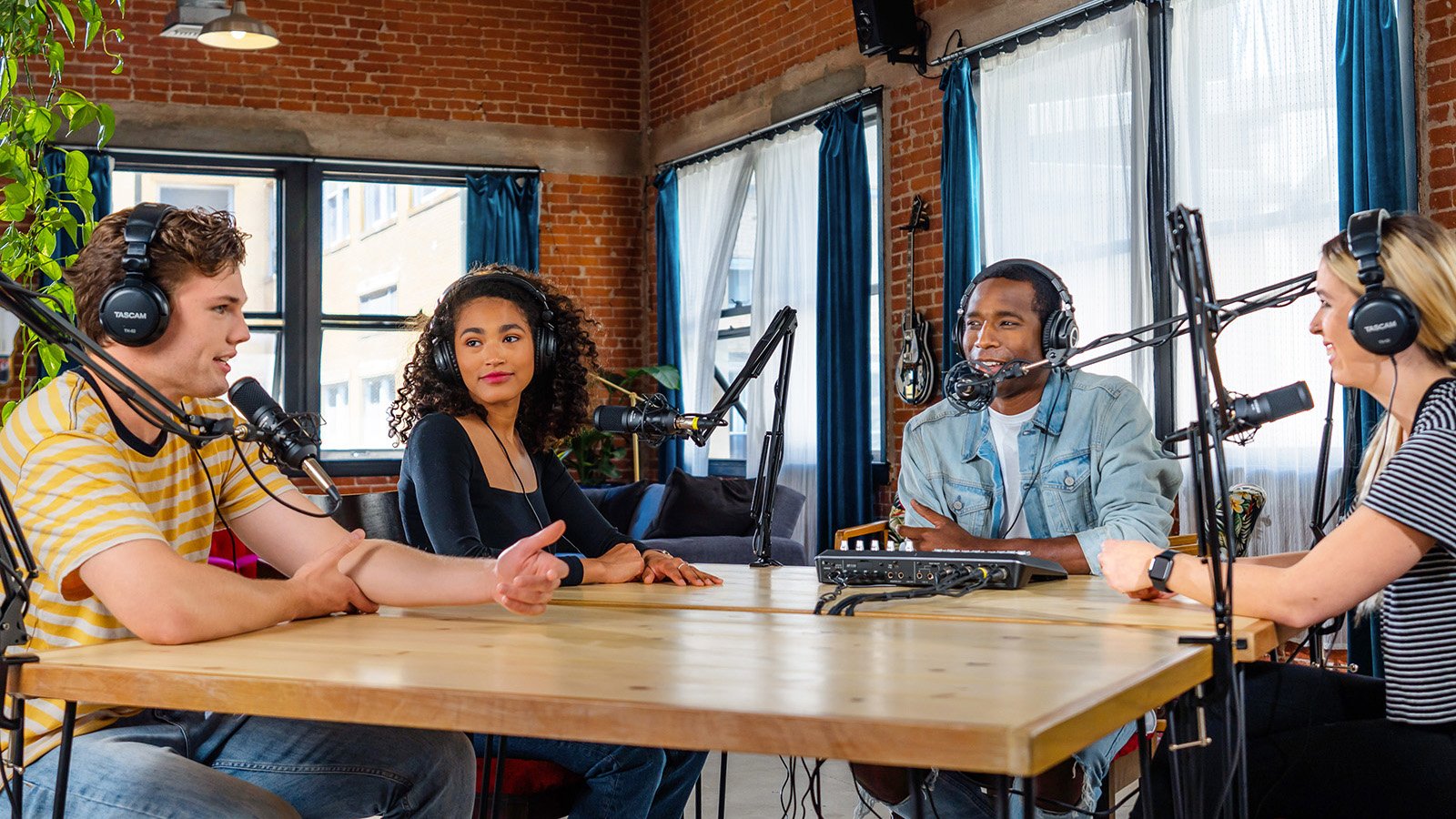
Podcasters can launch a fully branded iOS and Android app that pulls in every episode automatically, sends push notifications directly to listeners, and sits entirely outside Spotify and Apple’s control. Platforms like OverTheTop.app build and manage it for you, starting from $249/month with no setup fee and no revenue share — no custom development required.
You built an audience by showing up in people’s earbuds every week. The problem is that Spotify knows who your listeners are. Apple knows. Amazon knows. Spotify knows. You do not.
That is not a small issue. Your listener list is not yours to export. If Spotify changes its algorithm, deprioritises your show, or decides your category is no longer worth promoting, you find out when your downloads drop — not before. If your account is ever suspended or you want to move platforms, you are starting from zero with no way to reach the audience you spent years building.
This playbook is about fixing that. Not by leaving the platforms — but by building something underneath them that you own.
Why do podcast platforms own your listener relationship?
When someone subscribes to your show on Spotify, Spotify holds that subscription. They decide whether your new episode appears in the listener’s feed. They decide whether their algorithm surfaces your show to new potential listeners. They decide what your analytics look like and how much of that data you can actually access.
Apple Podcasts is the same. So is Amazon Music. So is every aggregator that hosts your RSS feed.
The RSS feed model — which powers almost all podcast distribution — is technically open, but the listener relationship is closed. The person who follows your show on Spotify is not following you. They are following your Spotify presence. Those are very different things.
What you actually own is your RSS feed, your episode audio files, and whatever email list you have managed to build separately. That is it.
A branded podcast app changes the ownership equation. Listeners who download your app are in your world, not Spotify’s. You have their notification opt-in, their engagement data, and a direct line to them that no platform can revoke.
What does audience ownership actually look like for a podcaster?
Concrete ownership comes down to three capabilities.
Push notifications. When a new episode drops, you can reach every app user directly — not through a platform algorithm, not through an email they might not open, but through a push notification on their phone. Push notification open rates average 7.8%. Compare that to under 1% organic reach on most social platforms, or the increasingly unreliable open rates on marketing emails. Push is the highest-performing direct channel available, and it is sitting unused by most podcasters.
Listener data. Inside your app you can see who is engaging, how often, and with what content. You are not looking at aggregate anonymous numbers. You are building a picture of your actual audience that you can use for sponsorship pitches, content decisions, and community building — and that data belongs to you.
Independence. Your app exists separately from any streaming platform. If you move your podcast off Spotify tomorrow, your app listeners follow you. If Spotify suspends your account, your app is unaffected. Your community, your notification list, and your engagement history stay intact.
How does a podcast app work alongside Spotify and Apple — not instead of them?
Your streaming numbers do not drop. That is the most important thing to understand before anything else.
OverTheTop.app uses an OTT 2.0 architecture where content is embedded rather than hosted separately. Episodes inside your app still stream from their original source — Spotify, Apple, your RSS host. Those stream counts still register on the original platform. Your Spotify numbers keep climbing. Your Apple chart position is unaffected.
What your app adds is a layer of reach the streaming platforms cannot see. A listener who opens your app, reads your show notes, sends a message in your fan chat, and gets a push notification when your next episode drops — none of that engagement is happening on Spotify’s platform. It is happening in yours.
Meanwhile, your app gives scattered listeners a single place to find everything you make. The listener who only knows your podcast might not know you have a YouTube channel or a newsletter. The fan who follows you on Instagram might not have ever subscribed on Apple. Your app puts your entire content universe in one place, under your name, and automatically updates as you publish anywhere.
What can you monetise inside a podcast app that Spotify and Apple will not let you touch?
Spotify and Apple Podcasts have both introduced subscription and tip mechanics, but they take a revenue cut and the listener relationship stays with the platform, not with you.
Inside your own app the economics are different.
Direct listener subscriptions at a price you set, with 0% taken by OverTheTop.app. You set the tier, you set the price, you keep everything. Exclusive episodes or bonus content published only inside your app, behind a paywall your listeners control with their subscription. Promoted posts for sponsors — you negotiate the deal directly, you place the content, you keep the fee. Merchandise integration for physical products sold through the app. Community features like fan chat that deepen listener relationships and give super-fans a reason to pay for membership.
None of this interferes with your Spotify or Apple income. It is a second revenue stream built on top of the audience you have already earned.
How does push notifications compare to email for reaching podcast listeners?
Both matter. Neither should replace the other. But understanding the difference helps you decide where to invest first.
| Channel | Avg open rate | Timing control | Requires platform? | You own the list? |
|---|---|---|---|---|
| Push notification (app) | ~7.8% | Immediate | No | Yes |
| 20–40% (but declining) | Flexible | No | Yes | |
| Spotify new episode alert | Platform-dependent | Delayed | Yes | No |
| Social post (organic) | Under 1% reach | Variable | Yes | No |
Email has a higher open rate ceiling, but deliverability has been degrading for years across most niches. It also requires a deliberate opt-in that many listeners never complete. Push notifications have lower overall open rates but near-instant delivery, no spam filter risk, and a much lower friction opt-in — when someone downloads your app and enables notifications, they are opted in.
For a podcaster, the ideal stack is: app push notifications for episode drops and time-sensitive announcements, email for longer-form updates and sponsor mentions, social for discovery. The app is the layer that converts a passive platform follower into an owned contact.
How much does it cost to launch a podcast app in 2026?
OverTheTop.app offers two plans.
The Launch plan is $249/month billed annually. It covers a fully branded iOS and Android app, AI-powered content aggregation from all your platforms, built-in fan chat, push notifications, and ongoing maintenance. Published under your own Apple and Google developer accounts. No setup fee. 0% revenue share.
The Pro plan is $449/month billed annually. It adds a full CMS for publishing exclusive content inside the app, live API integrations, in-app advertising, e-commerce, promoted posts, and custom push notification campaigns. The team can also publish on your behalf if you do not yet have your own developer accounts.
For a podcaster generating income through sponsorships, Patreon, or listener support, the app pays for itself when it converts a handful of passive listeners into paying subscribers or gives sponsors a new placement worth charging for.
What does the launch process look like?
You send your brand assets — logo, colours, the platforms where your content lives. The team builds your app and handles the App Store and Google Play submission. Apple’s review typically takes a few days to two weeks. Once approved, your app is live and pulling in your latest episodes automatically.
You do not change how you record or distribute. Your workflow stays exactly as it is. The app updates itself as you publish — new episodes, new social posts, new YouTube videos if you have them. The only new task is telling your audience to download it, which is also your first push notification.
FAQ
Will my Spotify or Apple Podcasts stream counts drop if I have my own app? No. Content inside your app streams from its original source. A Spotify stream through your app counts on Spotify. Your chart positions, listener numbers, and streaming analytics are unaffected.
Can I publish bonus episodes exclusively inside my app? Yes, on the Pro plan ($449/month). The built-in CMS lets you publish audio, video, articles, and updates that are only available inside your app. This is the most common way podcasters use their app to create a premium subscription tier.
How do push notifications actually work for podcasts? When you publish a new episode, your app can automatically send a push notification to every listener who has opted in. You can also send custom notifications manually — for live events, sponsor announcements, or community updates. Listeners opt in when they download your app, and the notification goes directly to their phone lock screen.
Do my listeners need to cancel Spotify to use my app? No. Your app complements Spotify and Apple Podcasts — it does not replace them. Most listeners will continue using both. The goal is not to pull them off Spotify but to build a direct relationship with them alongside it.
What podcast platforms does the app pull content from? OverTheTop.app aggregates from all major sources including Spotify, Apple Podcasts, YouTube, and your RSS feed directly. AI manages the updates automatically as you publish.
Can I use my app for a video podcast? Yes. If your podcast has a video version on YouTube or Vimeo, your app pulls that in automatically alongside the audio version. Viewers inside your app generate YouTube view counts as normal.
Related Content
- How to get your own app as a content creator — the full creator guide covering all formats
- Why YouTubers need their own app — the same audience ownership problem applied to video creators
- What is an OTT app? — the technology explained without jargon
- OverTheTop.app pricing — Launch plan from $249/month, Pro from $449/month